Turning invisible emissions into visible responsibility.
Carbon Bombs is a data platform mapping the world's largest fossil fuel projects — those capable of emitting more than 1 gigaton of CO₂ each. Built with Data For Good as a research, journalism and advocacy tool. The goal isn't just to inform, but to shift perception: from abstract climate risk to specific, accountable actors.
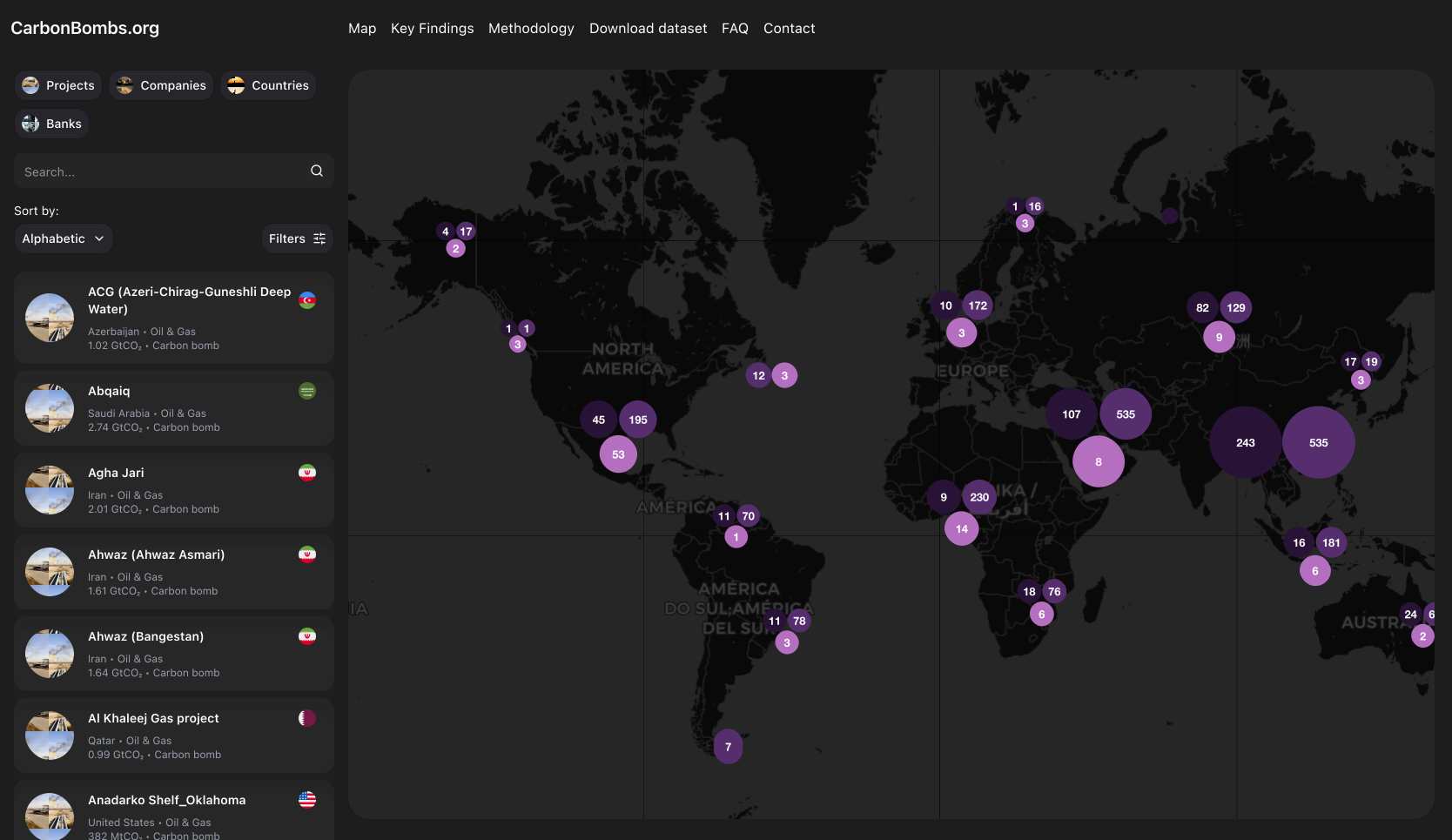
01 — The climate paradox
Climate data is scientifically robust, experientially distant.
Emissions are invisible. They're projected into the future. They're disconnected from anything we touch in our everyday life. The result: responsibility remains diffuse, and the people closest to the source — fossil fuel projects, companies, financiers — stay comfortably untraceable.
Data For Good came with a sharp, uncomfortable question we wanted to make impossible to dodge.
How might we make future emissions tangible, understandable, and attributable?
02 — Redefining the map
The brief said map. A map shows what's there — not what shouldn't be.
The original idea was simple: plot the largest fossil fuel projects on a world map. I started designing it that way. Halfway in, I realised the map was answering the wrong question.
A map shows where. It doesn't show which banks are funding extractions that already break international accords. It doesn't show that the same five companies are behind a quarter of these projects. It doesn't show that some of these sites haven't even broken ground — and were never supposed to.
The data Data For Good had collected wasn't a list of places. It was a network: projects → companies → financial backers → countries → treaties. The product had to be one too.
Stop designing a map of carbon bombs. Start designing an accountability graph that uses the map as its front door.
03 — The shifts that mattered
Four design moves shaped the entire experience — each one a deliberate trade-off between accuracy and clarity.
Keep the map. Demote it.
The map stays — it's the most intuitive way to navigate global data. But it stops being the answer. It becomes the front door: a way in, not the place where understanding ends.
Build the graph beneath it
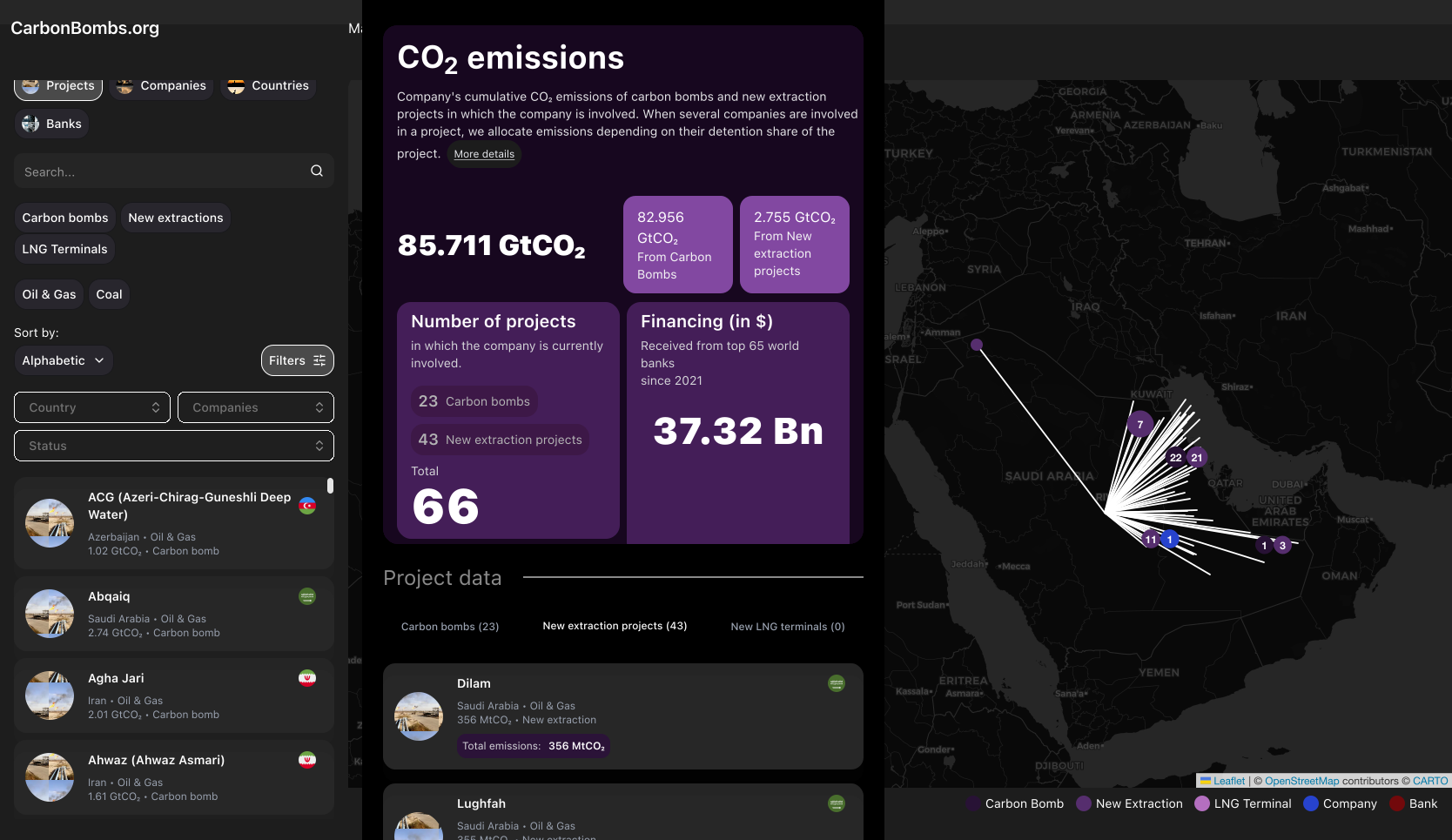
Every entity becomes a card with its own profile: companies, banks, countries, LNG terminals, new extractions, carbon bombs. Each card links to every other card it's tied to. The product is a network of relationships, not a dataset.
Draw the relationships on the map
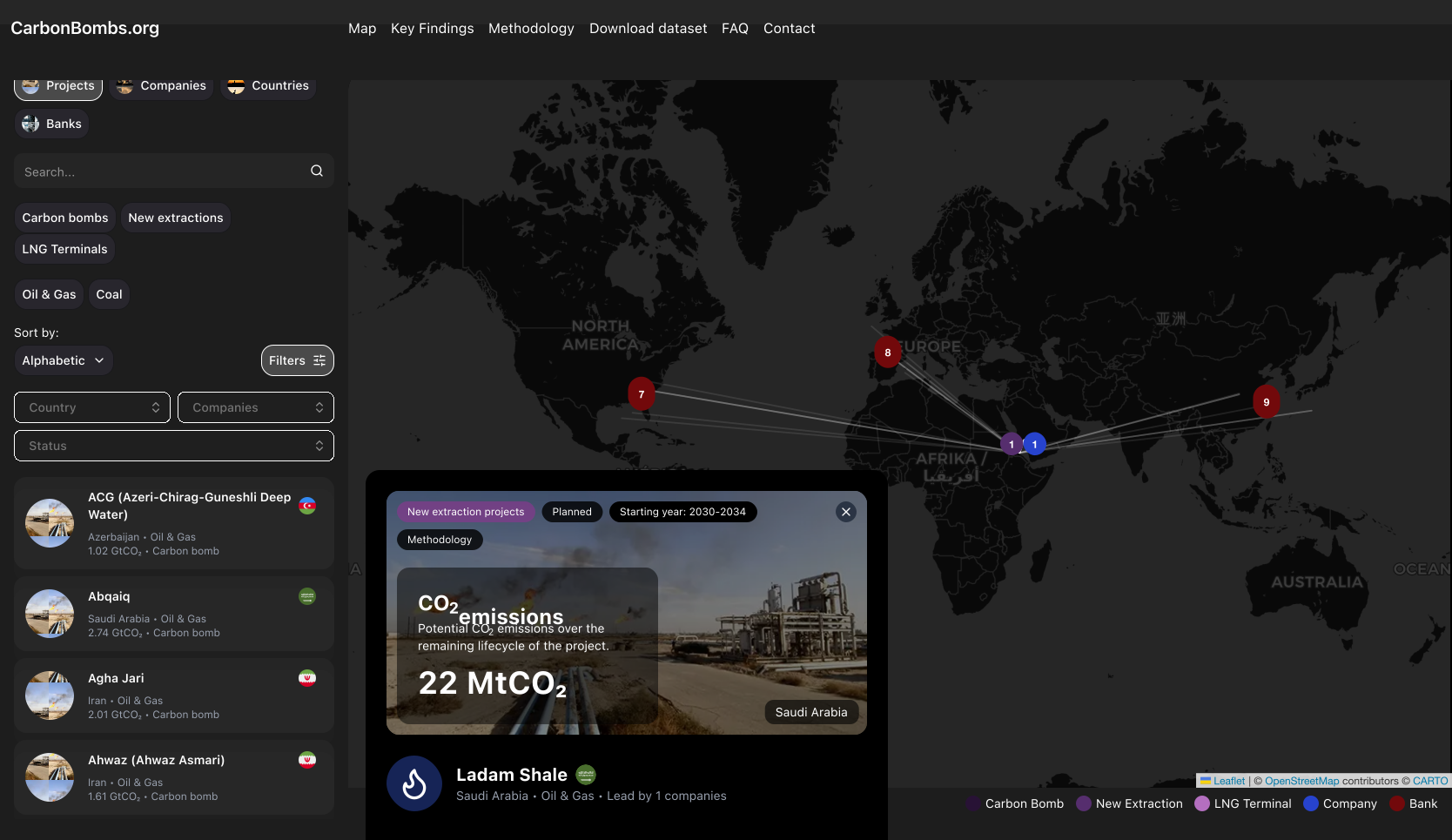
The most loaded design move: when a user opens a company, the map redraws to show the lines — to its projects, its banks, the countries that protect it. The network becomes spatial. Accountability becomes a picture.
Two-speed audience
Designed first for the people who'd actually use it as a working tool — investigative journalists, NGOs, climate researchers. Then progressively layered the entry points and framing for a broader public audience, without dumbing down the depth.
04 — The front door, not the answer
The map became a navigation surface — and a place to draw the lines.
I almost cut it. Then I realised the geography wasn't the problem — being stuck in the geography was. The map is still the most legible way for a non-expert to grasp scale and reach. The fix was to let it redraw itself: when you open a company card, the map redraws with lines to its banks, its projects, the countries that shield it. Same canvas, completely different question being answered.
05 — What had to give
A graph this dense forces choices.
Every relationship I exposed was a relationship someone could get lost in. Every dataset I pulled in was uneven — different years, different methodologies, different definitions of what even counts as a “project”. The hard work wasn't showing the data. It was deciding what to leave out without lying.
A company can be tied to dozens of projects, banks and countries. Showing every link kills readability. We surfaced the ones that carry meaning, hid the rest behind progressive disclosure.
Emissions are projections, not facts. We had to communicate ranges and assumptions without making the whole tool feel wobbly — credibility was the entire product.
Investigative journalists wanted depth and traceability. The general public needed an immediate hook. The same screens had to serve both — without dumbing down for one or alienating the other.
Depth vs First glance
Completeness vs Trust
06 — Where it landed
The reframe worked. The press picked up the graph, not just the map.
CarbonBombs.org became a primary source for climate journalism in France and beyond. Le Monde's Les Décodeurs built a full longform investigation around it. The Guardian had already been working from the same dataset. France Info, TF1 Info and a long tail of newsrooms followed.
The decisive thing wasn't that the data got published — it's that journalists could now pull threads: starting from a project, finding the company, then the bank, then the country's position on the latest climate accord. The structure of the tool became the structure of the story.
As a research and campaign tool to back claims with verifiable data.
As a structured source for investigations and editorial features.
As a communication lever to pressure financial institutions and policymakers.

Bombes carbone : ces projets fossiles qui ruinent les efforts pour le climat

Fossil fuel carbon bombs — climate breakdown in oil & gas
Explorez la carte mondiale des mégagisements de ressources fossiles

Bombes carbone : visualisez les plus gros sites d'extraction d'énergies fossiles dans le monde
Bombes carbone : le soutien crucial des banques françaises aux projets fossiles mondiaux

Climat : ces 425 sites « bombes carbone » qui font surchauffer la planète
07 — Lessons
- 01Data alone doesn't create impact — framing does.
- 02Simplicity is essential when dealing with complex systems.
- 03Design can play a real role in shaping public accountability.